
PROJECT 2
Stoke 349 - Stoke on Trent
Installation works for the loading bay equipment at Stoke 349, Stoke-on-Trent commenced following completion of the primary structural works and confirmation that the loading bay areas were ready for access. Initial activities included detailed site surveys, setting out works, and verification of dimensions to ensure all equipment could be installed in accordance with the approved construction drawings and project specifications.
.png)
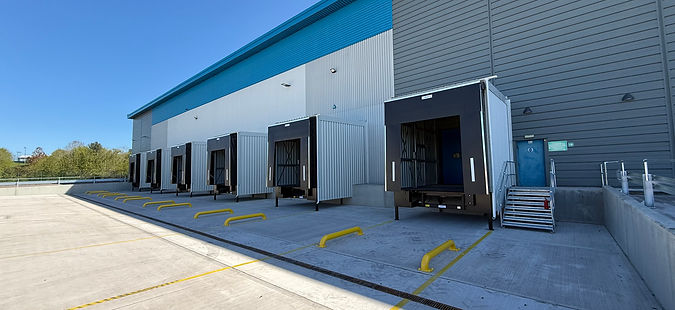
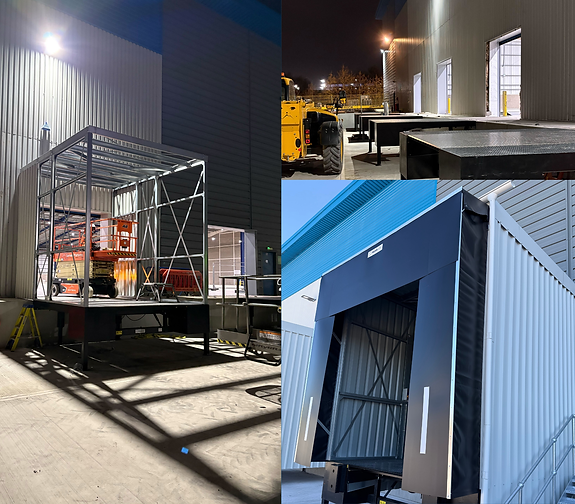
Load House systems are being progressively assembled using structural steel frameworks designed to extend the loading bays externally from the main building line, maximising internal warehouse space and improving vehicle access efficiency. Load House structures are being assembled and securely fixed to the building façade and supporting steelwork, providing the external framework for the loading bay systems.
Installation activities include fitting structural support beams, suspended platforms, weather protection components, and integrated connection points for dock levellers, shelters, and sectional doors. Ongoing alignment and level checks are being carried out to maintain structural integrity and ensure accurate installation tolerances across all loading bay positions.
.png)
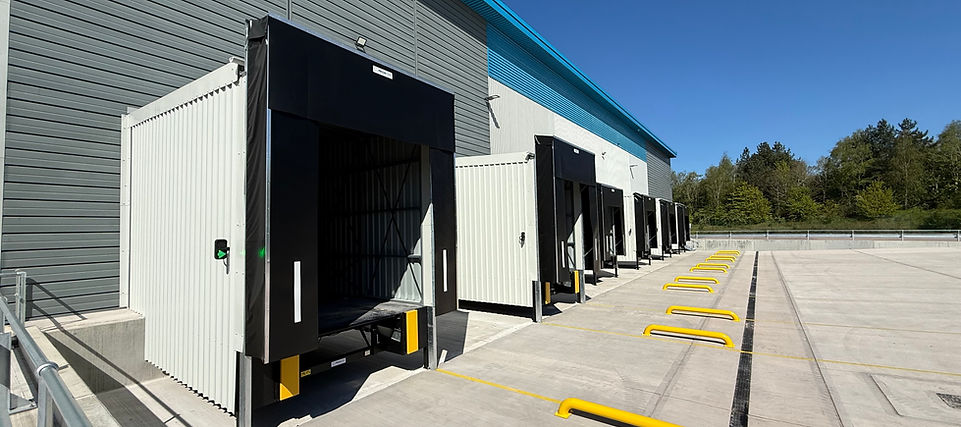
Dock levellers are being installed and aligned within the prepared pits, including the fitting of hydraulic systems, control units, and safety components.


Sectional doors are being fitted with vertical and horizontal track systems, insulated door panels, motors, and associated operating mechanisms to ensure smooth and reliable operation.


Dock shelters are also being installed to create a weather-sealed interface between vehicles and the loading bays, improving operational efficiency and environmental protection.
The installation includes fitting galvanised steel frames, heavy-duty curtain materials, head pads, side pads, and protective components designed to accommodate varying vehicle sizes during loading and unloading operations. Each dock shelter is being carefully aligned and securely fixed to ensure effective sealing performance, durability, and long-term operational reliability within the loading bay environment.

Final works will include calibration of controls, safety checks, alignment verification, sealing inspections, and confirmation of correct integration between all loading bay systems. Any minor defects or snagging items identified during the commissioning process will be rectified prior to final handover.


